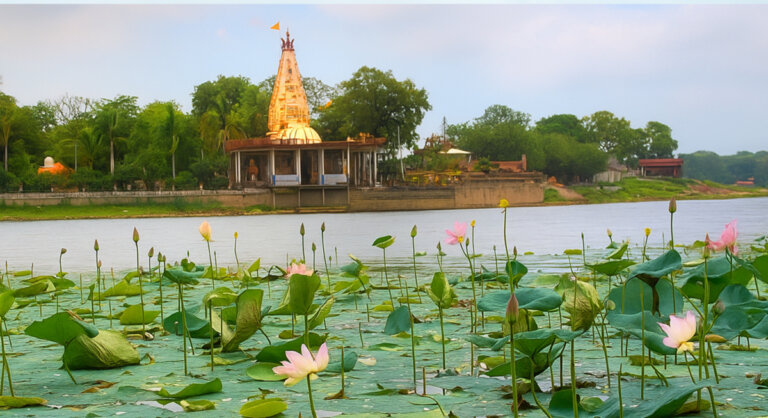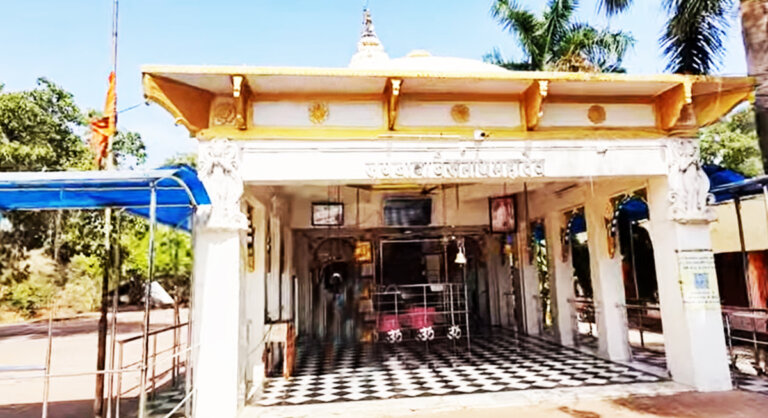

If Jabalpur is known only as the city of the Narmada River, Bhedaghat and the famous Marble Rocks, then only half of its story has been told. The land of Jabalpur and its surrounding region is home to many religious and historical places where faith stands alongside centuries—and sometimes thousands of years—of history. Among these places, the Tripura Sundari Rajrajeshwari Temple in Tewar Village holds a special place of devotion.
The Tewar region may appear to be an ordinary rural area at first glance, but its historical importance runs remarkably deep. Present-day Tewar is associated with the ancient city of Tripuri. Archaeological excavations carried out in the region have revealed cultural layers associated with the Kushan, Shunga, Satavahana and Kalachuri periods. Archaeological remains such as fragments of sculptures, copper coins, terracotta objects, iron tools, pottery and remnants of ancient structures have also been discovered in the area.
Within this ancient historical landscape, the worship of Maa Tripura Sundari gives the temple its special religious identity. In local tradition, Maa Tripura Sundari is worshipped as a manifestation of Adi Shakti, the primordial divine feminine power. Several local legends connected with the goddess spiritual power and miraculous blessings have deepened the faith of devotees over generations.
One of the most fascinating aspects of visiting this temple is that the journey is not limited to darshan alone. It also provides an opportunity to explore the ancient land of Tewar, the heritage associated with the Kalachuri period and the historical sites located nearby. This combination of faith, history and mystery makes the Tripura Sundari Rajrajeshwari Temple one of the important religious destinations in the Jabalpur region.
Click here to know about Roopnath Dham Bahoriband.
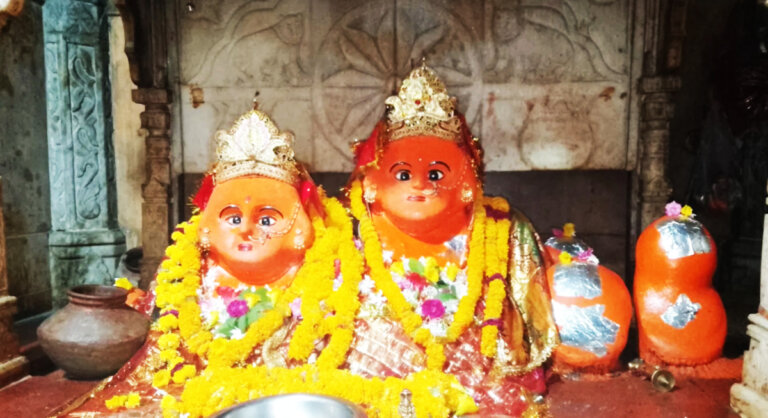
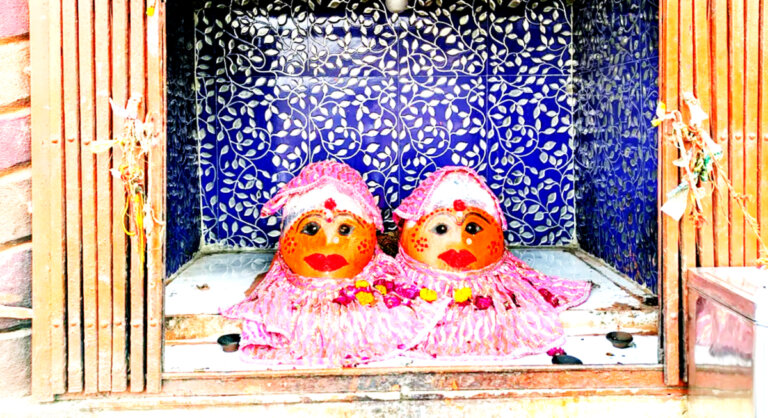
The temple is dedicated to Goddess Tripura Sundari, who is worshipped as the supreme goddess of Shakti in Hinduism. The temple houses three grand idols of Goddess Mahakali, Goddess Mahalakshmi, and Goddess Saraswati, representing different aspects of divine feminine power. The religious and historical significance of this temple makes it a prominent pilgrimage site for devotees from Jabalpur and surrounding areas.
Amazing Chousath Yogini Temple of Jabalpur. Click Here
Establishment of the Temple
Several stories and traditions are associated with the establishment of the Tripura Sundari Rajrajeshwari Temple. The temple and its ancient religious identity are often linked with the Kalachuri period. Some local accounts associate the establishment of the temple with the Kalachuri ruler King Karna and describe it as being around the 11th century old.
However, it is important to distinguish between documented history and local tradition. The association of the Tewar region with the Kalachuri period is supported by archaeological evidence. Excavations in the Tewar area have revealed cultural remains associated with the Kalachuri period. However, the available archaeological information does not conclusively establish that the present temple was built by King Karna himself.
For this reason, the story connecting the temple’s establishment directly with King Karna is better understood as a local historical and religious tradition rather than a fully established archaeological fact.
According to local religious belief, the ancient idol of the Goddess is considered highly powerful. Devotees also share traditions connected with the divine appearance or manifestation of the Goddess. Over time, such stories have given the temple an identity that goes beyond being merely a place of worship and have transformed it into a centre of faith, mystery and local religious tradition.
The historical importance of Tewar makes the story of the temple even more fascinating. Ancient Tripuri was not simply an ordinary settlement. It was an important historical centre of Central India. Archaeological remains discovered in the region indicate that this land witnessed human activity and cultural development during several different historical periods.
Therefore, two aspects should be understood separately while discussing the establishment of the temple: the ancient and Kalachuri-period history of Tewar is supported by archaeological evidence, while stories connecting King Karna directly with the temple and traditions concerning the manifestation of the Goddess primarily belong to local religious belief.
History of the Temple:

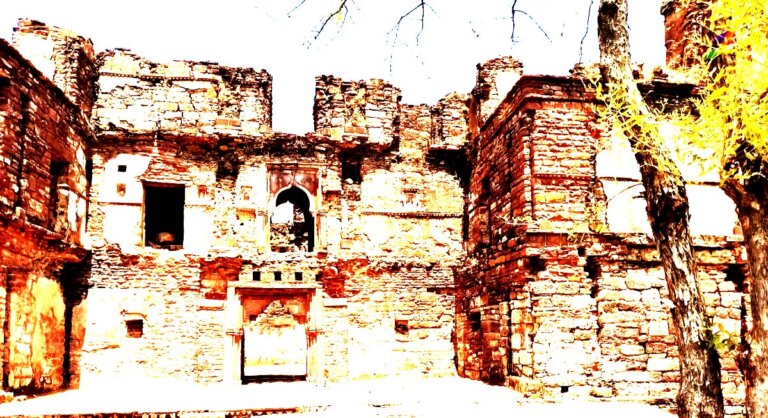
The history of the Tripura Sundari Rajrajeshwari Temple cannot be understood separately from the history of Tewar and ancient Tripuri. The archaeological landscape associated with ancient Tripuri lies close to present-day Tewar Village. Archaeological excavations in the area have revealed evidence of cultural development associated with the Kushan, Shunga, Satavahana and Kalachuri periods.
Fragments of ancient sculptures, copper coins, terracotta objects, iron tools, pottery and structural remains have been discovered during archaeological investigations. These findings indicate that the Tewar region was an important centre of cultural and historical activity for a very long period.
Archaeological work and conservation efforts in the broader Tewar and Tripuri region have also drawn attention to ancient structures, sculptures and other historical remains. This makes it clear that the heritage of Tewar is not limited to religious traditions alone. The region also holds considerable archaeological importance.
The religious identity of the Tripura Sundari Temple developed within this ancient historical environment. Local devotees worship Maa Tripura Sundari as a powerful form of the Divine Mother. Many local stories associated with the temple speak about the power of the Goddess, her divine presence and the fulfilment of devotees’ wishes.
This is where history and faith come remarkably close to each other. On one hand, archaeological discoveries tell the story of centuries of human civilization and cultural development. On the other hand, the worship performed at the temple continues to keep an ancient religious tradition alive.
From this perspective, the Tripura Sundari Rajrajeshwari Temple is more than just a local place of worship. It can also be seen as an important link between the living religious traditions of Tewar and the historical memory of ancient Tripuri.
Click here to know about Chaitanya City Hanuman Temple Jabalpur
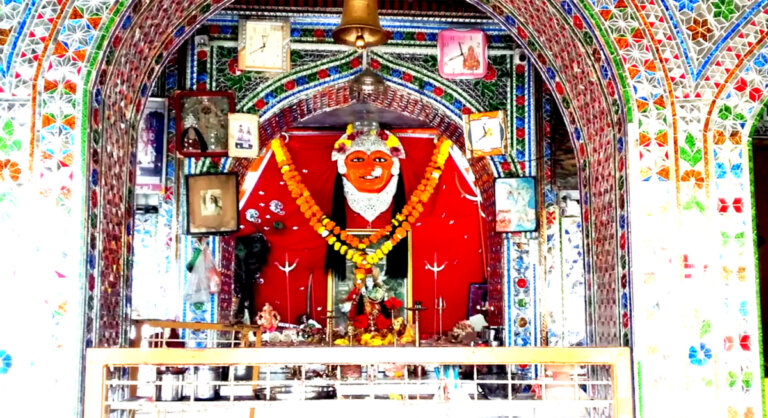
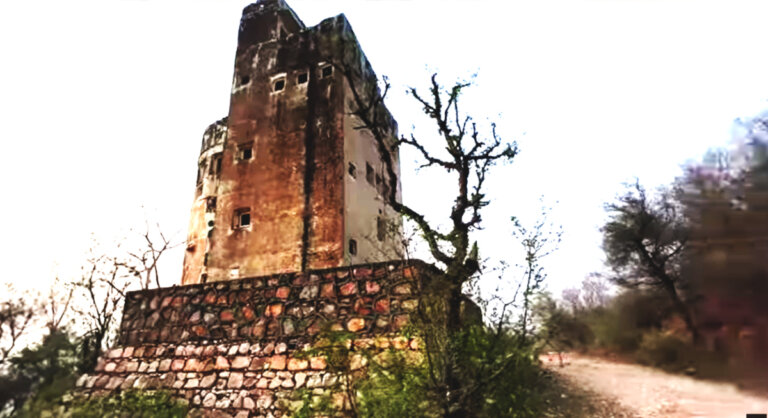
The Idol’s History: The idol of Goddess Tripura Sundari is believed to have emerged from the earth itself. It lies in a reclining posture, facing west, supported by a single stone slab. It is said that before 1985, the site was a fort, and this ancient idol was found there. Near the idol, a shepherd used to tie his goats. Over time, scholars and devotees recognized the significance of the site, and the temple was built and developed. The shepherd’s hut still exists near the temple as a testament to this legend.
Click here to know the history of Madan Mahal Fort.
Religious Significance:
The temple is devoted to Goddess Tripura Sundari along with Goddess Mahakali, Mahalakshmi, and Saraswati, representing the three key aspects of creation, preservation, and destruction. The name of the temple reflects these three forms, where “Tripura” symbolizes “three cities” (a metaphor for the three goddesses) and “Sundari” means “beautiful woman.” Together, they represent the divine feminine power and beauty.
Click for Omkareshwar Jyotirlinga Temple details.
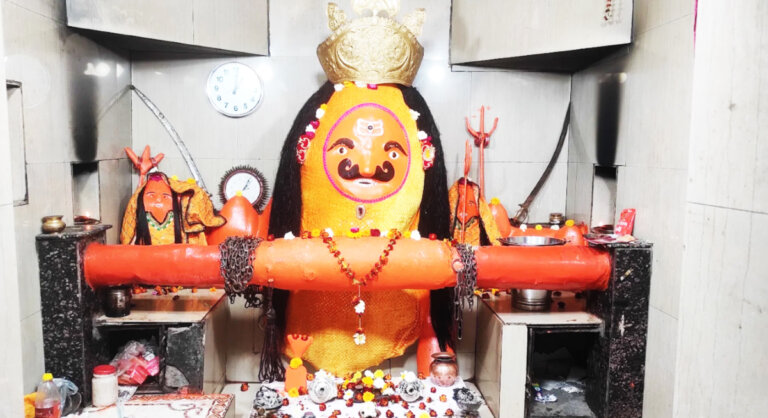
This site is also renowned for its Tantric traditions. According to mythology, Tripurasur, a demon, was slain at this very location. Historically, it is believed that this region was a Tantric center where practitioners performed intense rituals to please Lord Shiva.
Click here to read about Jabalpur Kedarnath Temple
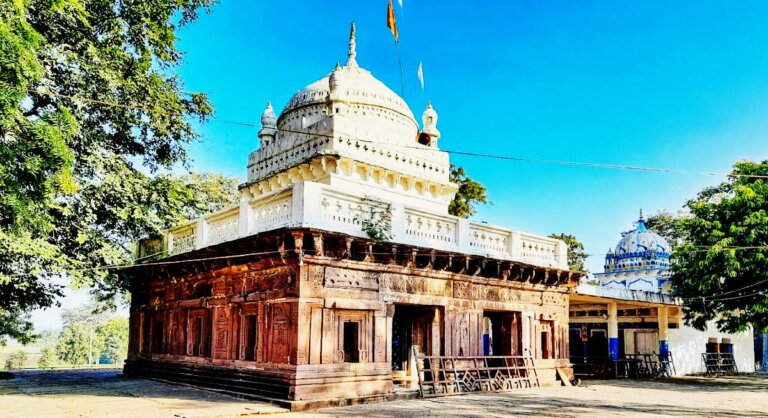
Temple Architecture

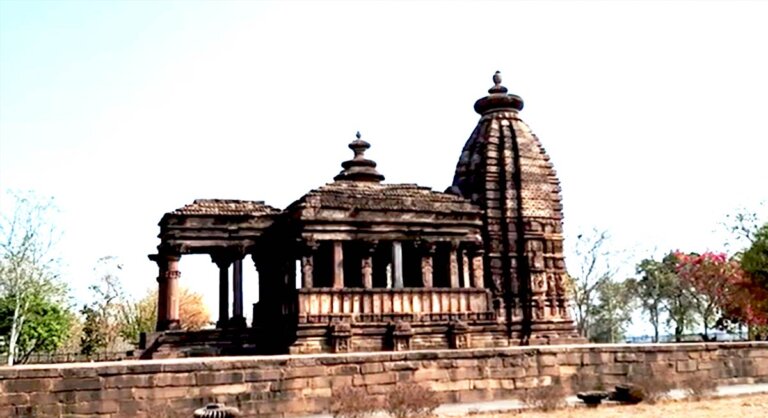
While understanding the architecture of the Tripura Sundari Rajrajeshwari Temple, it is important not to treat the present temple structure and the archaeological remains of ancient Tewar as exactly the same thing.
Archaeological evidence from the broader Tewar and Tripuri region confirms the presence of ancient structures, brick-built remains and sandstone architectural elements. However, a detailed official archaeological description establishing every architectural feature of the present temple as belonging specifically to the 11th century is not clearly available.
The spiritual centre of the temple is the sanctum dedicated to Maa Tripura Sundari Rajrajeshwari. For devotees, this is the holiest part of the temple and the main focus of worship and darshan. The atmosphere of the temple appears to be centred more on devotion, peace and Goddess worship than on architectural grandeur alone.
The surrounding historical landscape adds another dimension to the temple experience. Archaeological remains in the ancient Tripuri region include structural evidence that reflects the architectural traditions that once existed in this part of Central India.
For this reason, visitors interested in history and architecture should not limit their experience to the present temple building alone. Exploring the broader historical identity of Tewar and ancient Tripuri makes the journey far more meaningful.
The temple, the rural surroundings and the archaeological heritage of the region together create a unique atmosphere where religious architecture and ancient history appear side by side.
Key Features of the Temple
One of the most important features of the Tripura Sundari Rajrajeshwari Temple is its combination of religious significance and historical surroundings. Maa Tripura Sundari is worshipped here, while the Tewar region itself is historically important because of its association with ancient Tripuri.
According to local belief, the Goddess is considered highly powerful. Devotees visit the temple with prayers and wishes for happiness, prosperity, good health and the well-being of their families. Local traditions associated with wishes and prayers are also connected with the temple.
Another important aspect of the temple is the religious concept associated with different forms of the Divine Feminine. Local descriptions mention the forms of Mahakali, Mahalakshmi and Saraswati. Together, these forms symbolically represent power, prosperity and knowledge.
The historical surroundings of the temple are another major attraction. Archaeological discoveries in the Tewar region have revealed cultural layers associated with the Kushan, Shunga, Satavahana and Kalachuri periods.
The temple is also significant because of its strong connection with local faith. Many devotees believe in the spiritual power of the Goddess and visit the temple with deep devotion. Such beliefs should be understood as part of the living religious tradition of the temple rather than as established historical or scientific facts.
Another advantage of visiting the temple is its location in relation to other important destinations around Jabalpur and Bhedaghat. A visit to the temple can be combined with a journey to the Narmada River, Bhedaghat and several historical and natural attractions.
For this reason, the Tripura Sundari Rajrajeshwari Temple can appeal to devotees, history enthusiasts and travellers exploring the Jabalpur region.
Navratri and Dussehra Celebrations:
The temple remains a popular destination for devotees throughout the year, but it is especially vibrant during the festivals of Navratri and Dussehra. During Navratri, devotees flock to the temple for nine days of special prayers and rituals, and the entire temple is beautifully decorated. Similarly, during Dussehra, the temple witnesses a massive influx of worshippers, and the celebrations are grand.
Deities Inside the Temple
The main deity worshipped at the Tripura Sundari Rajrajeshwari Temple is Maa Tripura Sundari Rajrajeshwari. The Goddess is worshipped as a manifestation of divine power, and she remains the central focus of the temple’s religious activities.
Local descriptions associated with the temple also mention the forms of Mahakali, Mahalakshmi and Saraswati.
Mahakali is traditionally associated with divine power and the destruction of negative forces. Mahalakshmi represents prosperity, wealth and good fortune, while Maa Saraswati is worshipped as the Goddess of knowledge, learning, music and the arts.
In this way, the religious concept associated with the temple is not limited to only one symbolic aspect of the Divine Mother. It reflects different dimensions of Shakti, including power, prosperity and wisdom.
The worship of Maa Tripura Sundari is associated with the broader Shakta tradition of Goddess worship. Devotees generally offer prayers and traditional religious items such as flowers, coconuts and chunri, although the exact method of worship and offerings may vary according to local customs and festivals.
It should also be noted that a complete and officially verified public list of every deity present inside the temple is not readily available. Therefore, it is better not to identify additional deities as permanent temple deities without reliable confirmation.
For most devotees, the primary spiritual attraction of the temple remains the darshan of Maa Tripura Sundari and the experience of devotion associated with her worship.
Places Worth Seeing Inside the Temple
The Sanctum of Maa Tripura Sundari Rajrajeshwari
The sanctum is the most important part of the temple. This is where devotees come for the darshan of Maa Tripura Sundari Rajrajeshwari, offer prayers and place their wishes before the Goddess.
The Form of Mahakali
Mahakali is traditionally regarded as a symbol of divine strength and the destruction of negative forces. Her presence within the religious concept associated with the temple represents the powerful dimension of Goddess worship.
The Form of Mahalakshmi
Mahalakshmi represents prosperity, wealth and good fortune. Devotees pray for the happiness and well-being of their families and seek blessings associated with prosperity.
The Form of Saraswati
Maa Saraswati represents knowledge, education and wisdom. Students and people connected with learning and the arts traditionally regard this form of the Goddess with special devotion.
The Temple Complex
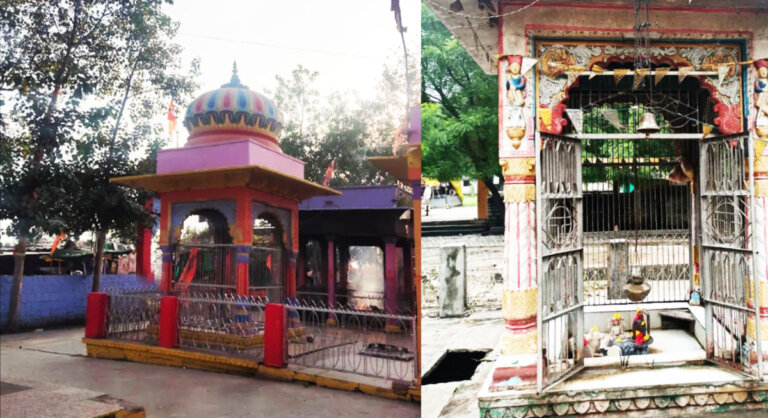
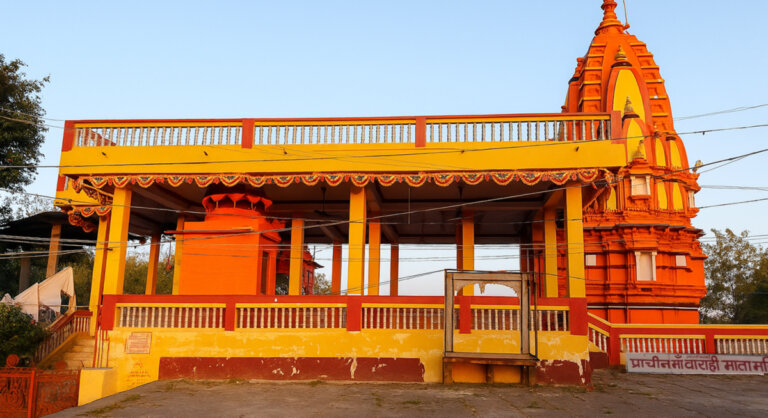
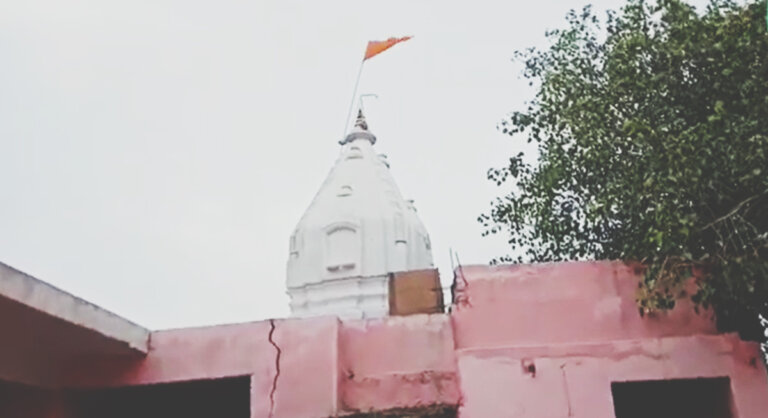
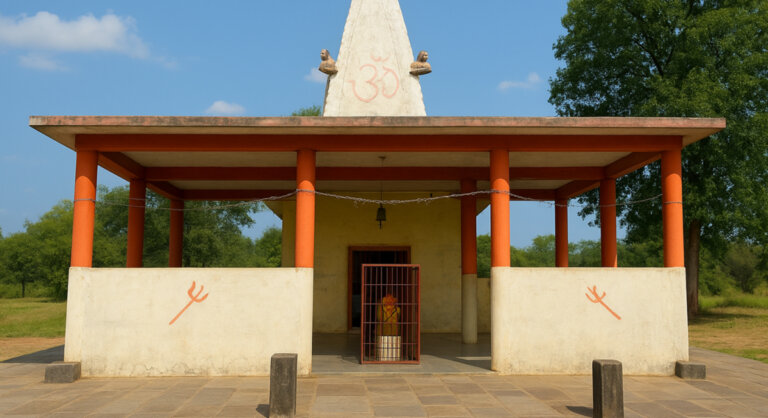
The temple surroundings are also worth observing. The atmosphere provides an opportunity to experience local religious traditions, worship practices and the living culture of the devotees who regularly visit the shrine.
Traditions Associated with Wishes and Prayers
Local traditions connected with wishes and prayers are also associated with the temple. Devotees may participate in these practices according to their personal faith and local religious customs.
Before taking photographs or recording videos inside the temple, it is advisable to seek permission from the priest or temple authorities. Special respect should be shown to the sanctum and religious rituals.
Click here to read about Dumna Nature Reserve Park Jabalpur
Click for information about Kankali Devi Temple Tigwa.
Historical Importance of Tevar Village:
Tevar village, historically known as Tripuri, was once the capital of the Kalchuri dynasty. The region holds great historical and archaeological significance. Many ancient artifacts and remnants have been discovered in this area, which shed light on its rich cultural past. The surrounding area is also home to several other ancient temples and religious sites, making it a key pilgrimage destination.
Click here to know about Jabalpur’s Waterfall Bhedaghat.
Aarti and Bhajans Performed at the Temple
Regular worship and devotional activities are associated with the Tripura Sundari Rajrajeshwari Temple. However, a detailed and officially confirmed public schedule for the daily aarti is not consistently available. Therefore, it is not advisable to treat an uncertain online timing as a permanent official schedule.
During aarti, the sound of bells, the light of lamps and devotional chants create a deeply spiritual atmosphere. Devotees gather to offer prayers to the Goddess during morning and evening worship. On special religious occasions, the scale of worship and rituals may become more elaborate.
The atmosphere becomes especially devotional during Navratri. Devotional songs, hymns dedicated to the Goddess, Durga stuti, mantra chanting and collective worship may form an important part of the celebrations.
If you specifically wish to attend the aarti, the most reliable option is to confirm the timing locally on the day of your visit. The schedule may change during festivals and special religious occasions.
Visitors should maintain discipline during aarti and bhajan programmes. In periods of heavy crowds, avoiding pushing and following the instructions of temple authorities is recommended.
The experience of aarti at this temple can be especially meaningful for travellers who wish not only to visit a tourist destination but also to experience local religious culture and Goddess worship.
Major Festivals and Events
Navratri is considered one of the most important religious occasions associated with the worship of Maa Tripura Sundari. During Navratri, special prayers and religious activities take place, and the number of devotees visiting the temple may increase significantly.
Both Chaitra Navratri and Sharad Navratri are important occasions for Goddess worship. During these festivals, devotees visit the temple for darshan, prayers and participation in religious rituals.
Dussehra is also an important period because of its connection with Goddess worship and the wider religious celebrations of the Navratri season.
During special occasions, activities such as bhajans, devotional singing, Goddess worship, religious rituals and prasad distribution may take place according to local traditions. However, the exact nature and schedule of programmes can vary from year to year.
A detailed annual calendar of all temple events may not always be publicly available. Therefore, travellers planning their visit specifically for a major religious programme should confirm the current schedule locally before travelling.
Navratri visitors should also be prepared for large crowds. Arriving early in the morning may provide a more convenient experience.
Festivals at a Goddess temple are not only religious occasions. They also offer a glimpse into local culture, collective devotion and the social traditions of the surrounding community.
Temple Timings
A single, universally confirmed schedule for the Tripura Sundari Temple is not consistently available across public sources. Different online listings may provide different timings. Therefore, it is better not to treat any unverified schedule as a permanent official timing.
For a peaceful darshan experience, arriving in the morning can be a convenient option. The temple atmosphere may be relatively calm during the earlier part of the day.
Devotees also visit during the evening, when the atmosphere around worship and aarti can be especially devotional. If attending the aarti is your main purpose, confirm the exact timing locally on the day of your visit.
During major festivals such as Navratri, the temple schedule may change. The temple may remain open for longer hours depending on local arrangements and religious activities.
Therefore, visitors travelling from outside Jabalpur should confirm the current darshan and aarti timings before beginning their journey.
Best option: Morning is generally a convenient time for a peaceful visit, while Navratri is ideal for travellers who want to experience a more vibrant devotional atmosphere.
Places to Visit Near the Temple
Ancient Tripuri and the Tewar Archaeological Region
A visit to the Tripura Sundari Temple can be combined with an exploration of the historical identity of ancient Tripuri. Archaeological investigations in the Tewar region have revealed evidence associated with several important historical periods, making the area especially interesting for history enthusiasts.
Bhedaghat
Bhedaghat is one of the most famous attractions near Jabalpur. Located along the Narmada River, it is renowned for its spectacular Marble Rocks. The natural scenery can be particularly attractive during the morning and evening.
Dhuandhar Waterfall
Dhuandhar Waterfall is one of the best-known natural attractions in the Bhedaghat region. As the waters of the Narmada River descend rapidly through the rocky landscape, the spray creates a mist-like appearance, giving the waterfall its famous name.
Chausath Yogini Temple
This ancient temple near Bhedaghat is important from both religious and historical perspectives. Visitors need to climb a number of steps to reach the temple, but the elevated location also offers impressive views of the surrounding landscape and the Narmada region.
Narmada River
A visit to the Narmada River can add another spiritual dimension to the journey. The entire Jabalpur and Bhedaghat region has a deep geographical, cultural and religious connection with the river.
Together, these destinations can turn a visit to the Tripura Sundari Temple into a complete journey of faith, history and natural beauty.
Important Things to Keep in Mind
While visiting the temple, maintaining religious decorum should be the first priority. Wearing clean and respectful clothing and behaving quietly inside the sanctum and worship areas is recommended.
During Navratri, the temple may receive a large number of devotees. Visitors travelling with children or elderly family members should take additional care. Arriving early may help avoid the heaviest crowds.
If you purchase puja materials or participate in a special ritual, it is advisable to confirm the details and charges in advance.
Local traditions connected with wishes and offerings may be followed according to personal faith, but visitors should not feel that every practice is compulsory.
Before taking photographs, always seek permission. It is especially important to respect restrictions related to the sanctum, the deity and ongoing religious rituals.
The Tewar region also has historical and archaeological importance. If you encounter ancient remains or archaeological objects, do not attempt to remove, damage or take them away. Protecting historical heritage is everyone’s responsibility.
Carrying drinking water, a mobile charger or power bank and comfortable footwear can make the journey easier.
Most importantly, the temple should not be viewed only as a tourist attraction. It is a living centre of faith for the local community, and visitors should respect the traditions and religious sentiments associated with the place.
How to Reach Tripura Sundari Temple:
The Tripura Sundari Raj Rajeshwari Temple is located about 13 kilometers from Jabalpur city on Bhedaghat Road, near Hathiyagarh.
- By Road: The temple can be easily reached by private vehicle, taxi, or auto-rickshaw from Jabalpur city.
- By Rail: Jabalpur Railway Station is the nearest railhead, located about 15 kilometers from the temple.
- By Air: The nearest airport is Dumna Airport in Jabalpur, which is approximately 25 kilometers from the temple.
Click here to know the history of Madan Mahal Fort
Travel Tips:
- Best Time to Visit: The ideal time to visit the temple is during Navratri and Dussehra when the temple is decorated and special prayers are held. The festive atmosphere during these times adds to the spiritual experience.
- Dress Code: Visitors are advised to wear traditional Indian attire and carry their prayer materials when visiting the temple.
- Special Arrangements: During Navratri and Dussehra, special food offerings (bhog) and rituals are organized, which attract a large number of devotees.
To know about the Amazing and beautiful Jabalpur Jain Temple. Please click here.
A Great Way to Plan a One-Day Trip
Start your journey from Jabalpur in the morning and first visit the Tripura Sundari Rajrajeshwari Temple for darshan.
After that, spend some time understanding the historical significance of Tewar and ancient Tripuri. Then continue towards Bhedaghat, where you can explore the Marble Rocks, the Narmada River and the Chausath Yogini Temple.
Later, visit Dhuandhar Waterfall to experience one of the most dramatic natural attractions in the Jabalpur region.
In this way, a single day can offer a memorable combination of Goddess worship, ancient history, the Narmada River and spectacular natural scenery.
Best Time to Visit the Tripura Sundari Temple
If your main purpose is to enjoy a peaceful darshan experience, visiting during the morning on regular days can be a good option.
For travellers who want to experience the temple during its most vibrant devotional period, Navratri can be a particularly special time. However, visitors should also be prepared for significantly larger crowds.
For a broader Jabalpur sightseeing trip, the period from October to February is generally comfortable for exploring outdoor destinations such as Bhedaghat and other attractions in the region.
The monsoon season can make Dhuandhar Waterfall especially dramatic and visually impressive, although visitors should remain cautious because of changing weather conditions, higher water levels and local safety restrictions.
Why Visit the Tripura Sundari Rajrajeshwari Temple?
The true beauty of the Tripura Sundari Rajrajeshwari Temple lies not only in the darshan of the Goddess but also in the remarkable historical environment that surrounds it.
Imagine travelling a short distance from Jabalpur and arriving in Tewar. Before you stands a sacred place where Maa Tripura Sundari is worshipped with deep devotion. But the story of this land does not begin with the present temple.
The broader region is associated with ancient Tripuri, and archaeological discoveries have revealed evidence connected with several important historical periods, including the Kushan, Shunga, Satavahana and Kalachuri eras.
In other words, the land where devotees now bow before the Goddess has witnessed the passage of many centuries of history.
This is what makes the journey so fascinating.
Local traditions and legends add another layer of mystery and devotion to this historical landscape. Stories about the power of the Goddess, the fulfilment of wishes and religious customs passed down through generations continue to keep the temple spiritually alive.
And if you have a full day available, the journey can continue towards Bhedaghat. The Marble Rocks, the sacred Narmada River, Chausath Yogini Temple and Dhuandhar Waterfall can transform a religious visit into an unforgettable travel experience.
For travellers visiting Jabalpur, the Tripura Sundari Rajrajeshwari Temple is therefore much more than a temple. It is an opportunity to experience faith, ancient history, local traditions and natural beauty together.
Address and Google map of Tripura Sundari Rajrajeshwari Temple Jabalpur
Address: Siddha Baba Road Radhakrishnan ward, 482001
Click here to learn about Sharda Mata Temple Madan Mahal Temple Jabalpur
Images of Tripura Sundari Rajrajeshwari Temple Jabalpur

Other places to visit in Jabalpur.
- Dhuandhar Falls, Jabalpur
- Marble Rocks, Jabalpur
- Kedarnath Temple, Jabalpur
- Dumna Nature Reserve Park, Jabalpur
- Balancing Rock, Jabalpur
- Madan Mahal Fort, Jabalpur
- Rani Durgavati Museum, Jabalpur
- Chausath Yogini Temple, Jabalpur
- Bargi Dam, Jabalpur
- Tilwara Ghat, Jabalpur
- Pisanhari ki Madiya, Jabalpur
- Chataniya City Hanuman Temple
- Sea World Water Park
- Treasure Island, Mall
- Bhawartal Garden
- Kankali Devi Temple
- Sangram Sagar Lake
- Sri Vishnu Varaha Mandir
- Gwari Ghat
Click for information about Kankali Devi Temple Tigwa.
Interesting information about the Katni City of Madhya Pradesh.
Important Facts
Some aspects of the temple’s history are based on local traditions and religious beliefs. In particular, the story connecting the establishment of the temple directly with King Karna and certain miraculous traditions associated with the Goddess should be understood as local belief rather than conclusively established archaeological history.
At the same time, the historical importance of Tewar and ancient Tripuri is strongly supported by archaeological evidence. The region has revealed cultural remains associated with multiple historical periods and a variety of archaeological objects and structural remains.
Therefore, the Tripura Sundari Rajrajeshwari Temple can be appreciated from two equally fascinating perspectives: as a living centre of religious faith and as part of a region surrounded by the historical memory of ancient Tripuri.
Frequently Asked Questions About Tripura Sundari Rajrajeshwari Temple
1. Where is the Tripura Sundari Rajrajeshwari Temple located?
The Tripura Sundari Rajrajeshwari Temple is located in Tewar Village in Jabalpur District, Madhya Pradesh, India. The area is historically associated with the ancient Tripuri region and is located within travelling distance of Jabalpur city.
2. Which Goddess is worshipped at the Tripura Sundari Temple?
The temple is dedicated to Maa Tripura Sundari Rajrajeshwari, who is worshipped as a manifestation of Adi Shakti, the primordial divine feminine power.
3. How old is the Tripura Sundari Temple?
Local traditions and published descriptions often associate the temple with the Kalachuri period and describe it as being around the 11th century old. However, the exact construction date and builder of the present temple are not conclusively established by detailed archaeological evidence.
4. Is the temple associated with King Karna?
Local tradition connects the establishment of the temple with the Kalachuri ruler King Karna. However, this connection is better understood as a local historical and religious belief rather than conclusively established archaeological fact.
5. What is the historical importance of Tewar Village?
Tewar is associated with ancient Tripuri. Archaeological investigations in the region have revealed cultural evidence connected with important historical periods, including the Kushan, Shunga, Satavahana and Kalachuri eras.
6. Are Mahakali, Mahalakshmi and Saraswati associated with the temple?
Local descriptions connected with the temple mention the forms of Mahakali, Mahalakshmi and Saraswati. These forms symbolically represent divine power, prosperity and knowledge.
7. Is there a belief that wishes are fulfilled at the temple?
Yes. Local devotees have a strong belief in praying to Maa Tripura Sundari for the fulfilment of wishes. Such beliefs and traditions are part of the living religious culture of the temple and should be understood as matters of faith.
8. What is the importance of Navratri at the temple?
Navratri is one of the most important periods of Goddess worship. During this time, special prayers and religious activities may take place, and the number of devotees visiting the temple can increase significantly.
9. Is the temple crowded during Dussehra and Navratri?
Yes, the number of visitors may increase considerably during Navratri and the surrounding festive period. Visitors should allow extra time for darshan and arrive early when possible.
10. What are the temple timings?
A single officially confirmed and permanent public schedule is not consistently available. It is best to confirm the current darshan and aarti timings locally before visiting, especially during festivals.
11. Is there an entry fee for the temple?
Reliable information about a fixed entry fee for regular darshan is not clearly available. Special puja, rituals or offerings may involve separate arrangements or charges.
12. What places can be visited near the temple?
Nearby attractions include the ancient Tripuri and Tewar historical region, Bhedaghat, Dhuandhar Waterfall, the Narmada River and Chausath Yogini Temple.
13. Can the Tripura Sundari Temple and Bhedaghat be visited on the same day?
Yes. The temple and Bhedaghat can be included in a single day trip. After morning darshan, visitors can continue towards Bhedaghat to explore the Marble Rocks, Narmada River, Chausath Yogini Temple and Dhuandhar Waterfall.
14. How can I reach the temple?
The temple can be reached conveniently by road from Jabalpur. Private vehicles, taxis and available local transport can be used. Jabalpur Railway Station and Jabalpur Airport are the main arrival points for travellers coming from other cities.
15. Is photography allowed inside the temple?
Photography rules may vary. It is advisable to ask the priest or temple authorities before taking photographs or videos, particularly inside the sanctum or during religious rituals.
16. What is the best time to visit the Tripura Sundari Temple?
Morning on regular days can be suitable for a peaceful darshan experience. Navratri is ideal for visitors who want to experience a more vibrant religious atmosphere, although crowds can be much larger.
17. Is the temple suitable for a family visit?
Yes. The temple can be visited with family members. During busy occasions such as Navratri, extra care should be taken when travelling with children and elderly visitors.
18. Why should you visit the Tripura Sundari Rajrajeshwari Temple?
The temple offers a unique combination of religious faith, local tradition, historical surroundings and access to some of the most famous attractions around Jabalpur. A visit can combine the darshan of Maa Tripura Sundari with the ancient heritage of Tewar and Tripuri, followed by the natural beauty of Bhedaghat and the Narmada River.
Click here to learn about Roopnath Dham Bahoriband.
Beautiful Waterfall of Katni City.
Click to learn about the Metro Museum, Delhi.
To know about Mahakaleshwar Jyotirling of Ujjain click.
Delhi Handcrafted Bazaar Dilli Haat.
 2
2 20
20 20
20