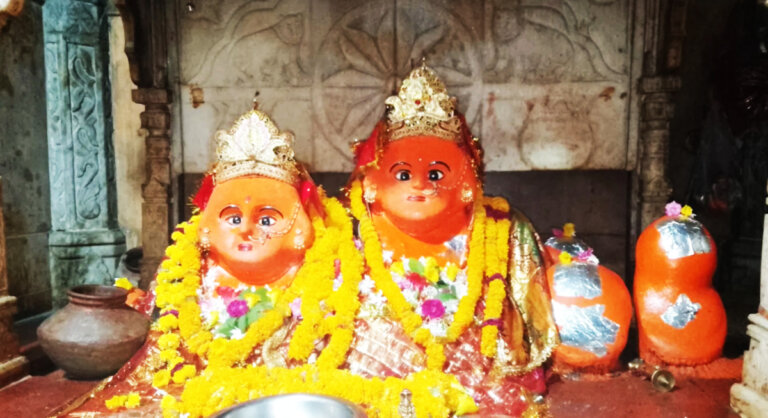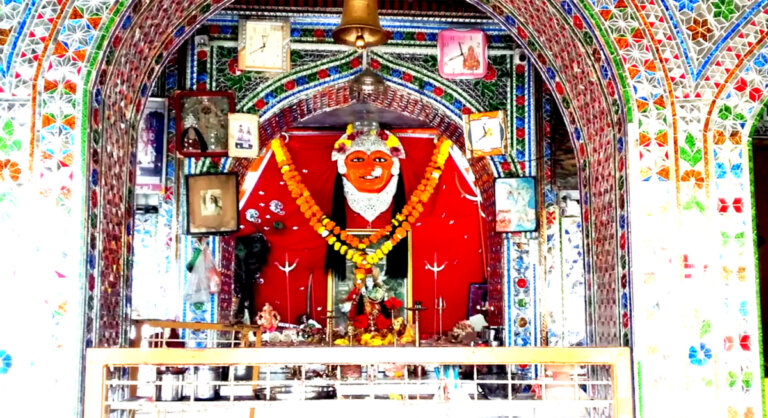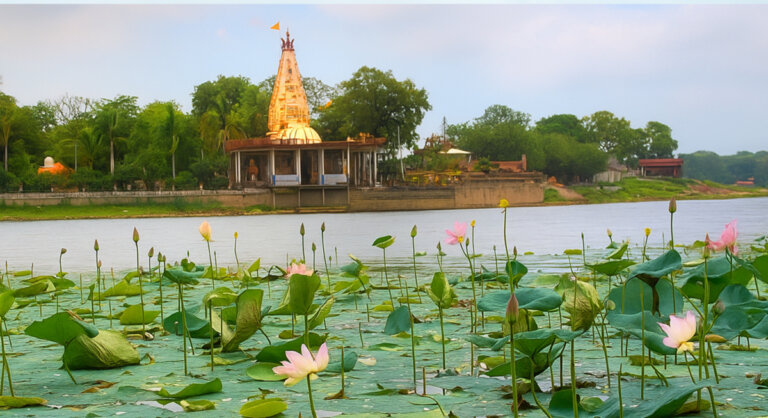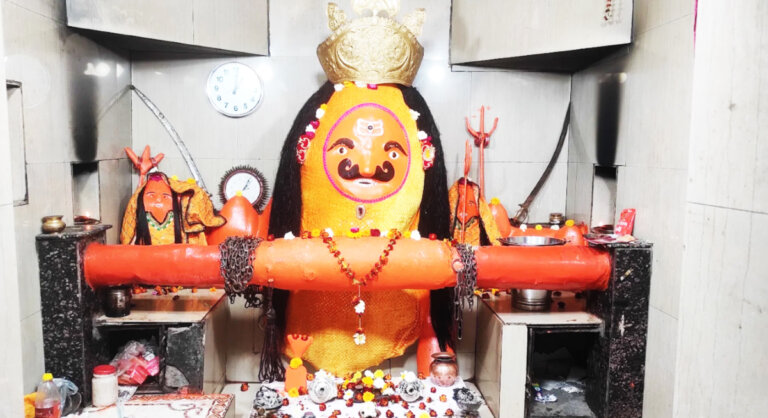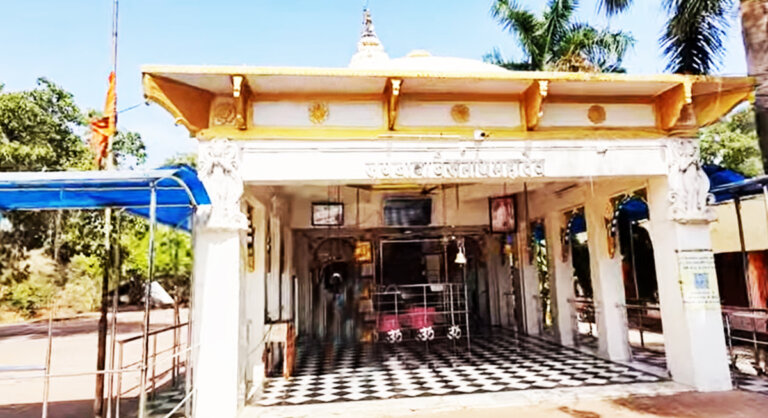

Jabalpur in Madhya Pradesh is home to many fascinating religious places where faith, nature, and unique spiritual traditions come together. Shri Supteshwar Ganesh Temple is one such remarkable destination. Located on a hill in the Ekta Vihar area along Ratan Nagar Road, the temple is particularly known for a massive natural rock formation that is believed to represent Lord Ganesha.
What makes this temple truly unusual is that the main form of Lord Ganesha is not a traditionally carved idol. Instead, devotees worship the natural shape of a massive rock as a divine manifestation of Lord Ganesha. This creates a spiritual experience that is quite different from visiting a conventional temple.
Lord Ganesha worshipped here is known as Shri Supteshwar Ganesh, Siddha Vinayak, and Kalki Nij Murti. The religious tradition associated with the temple also connects Lord Ganesha with a special future manifestation. For devotees visiting the hill for the first time, seeing the enormous natural rock resembling Lord Ganesha can be a deeply fascinating and memorable experience.
The story behind the establishment of the temple is equally interesting. According to available temple-related information, the temple was established in 1989. Before its establishment, Sudha Avinash Raje is said to have experienced dreams connected with the enormous form of Lord Ganesha and His manifestation on a hill. Later, a massive natural rock was discovered on the Ratan Nagar hill, and it was believed to represent Lord Ganesha. Worship subsequently began at the site.
Today, Supteshwar Ganesh Temple has developed a distinct identity among the religious destinations of Jabalpur. Visitors can experience the unusual natural form of Lord Ganesha as well as the peaceful surroundings of the hill. If you are looking for a place in Jabalpur where faith, nature, and a fascinating spiritual story come together, this temple is certainly worth including in your travel itinerary.
Amazing Chousath Yogini Temple of Jabalpur. Click Here
How Was Shri Supteshwar Ganesh Temple Established?
The story behind the establishment of Shri Supteshwar Ganesh Temple is not associated with an ancient king, royal dynasty, or historic battle. Instead, its origin is connected with spiritual experiences and dreams. This makes the history of the temple quite different from that of many ancient temples in India.
According to available information, Sudha Avinash Raje is said to have seen the enormous form of Lord Ganesha in a dream in 1985. Later, on the night of December 27, 1988, she reportedly experienced another dream connected with a hill and Lord Ganesha. Following this experience, she prayed to Lord Ganesha for further guidance.
In January 1989, she is said to have received further guidance through another dream. Following this, on February 4, 1989, Sudha Raje went with her husband in search of the place associated with her spiritual experiences.
While exploring the hill in the Ratan Nagar area, they came across a massive natural rock formation. According to the religious tradition associated with the temple, Sudha Raje recognized the rock as the same form of Lord Ganesha that she had previously seen in her dreams.
With the assistance of local residents, the hill was cleaned and preparations for worship began. In September 1989, the natural rock was ceremonially bathed with water from the Ganges and the Narmada River. Sindoor and ghee were then offered to the natural rock, and regular worship began.
Over time, the number of devotees visiting the site increased, and the location gradually developed into a regular place of worship.
Based on the available information, the establishment of the temple is therefore associated with 1989. There is no verified evidence in the available information to describe it as an 11th- or 12th-century temple. Its distinctive identity comes from its modern establishment story and the natural manifestation of Lord Ganesha.
Historical Background of the Temple:
The history of Supteshwar Ganesh Temple is relatively modern, but the religious beliefs associated with it give the temple a distinctive identity among the Ganesha temples of Jabalpur.
Lord Ganesha is worshipped here as Supteshwar Ganesh, Siddha Vinayak, and Kalki Nij Murti.
The most important feature of the temple is the enormous natural rock located on the hill. According to religious belief, the form of Lord Ganesha can be seen within this natural rock. The face of Lord Ganesha is said to be clearly visible, while the remaining portion of the rock is believed to extend beneath the ground.
Devotees consider this natural manifestation to be a self-manifested form of Lord Ganesha and worship it accordingly.
Another important religious belief associated with the temple concerns the Kalki manifestation of Lord Ganesha. Unlike the traditional depiction of Lord Ganesha with a mouse as His vehicle, the tradition associated with this temple connects Him with a white horse.
This unusual belief gives the temple a distinctive character and makes it particularly interesting for devotees and visitors.
However, these traditions should be understood as religious beliefs rather than verified archaeological history or scientific facts. According to available information, the temple developed after 1989.
Over time, the site became a notable destination for local religious tourism in Jabalpur. The enormous natural rock, peaceful hilltop surroundings, and distinctive representation of Lord Ganesha continue to attract visitors.
The history of Supteshwar Ganesh Temple is therefore less a story of an ancient empire and more a story of modern faith, spiritual experiences, and the worship of a remarkable natural rock formation.
Paat Baba temple Jabalpur. For details click here
Architecture of Supteshwar Ganesh Temple
The architecture of Shri Supteshwar Ganesh Temple is best understood through its natural setting rather than by comparing it with ancient stone temples.
The temple is situated in a hilly area, and its primary religious center has developed around the natural rock formation. The main attraction is not a completely separate statue carved by an artist. Instead, the natural shape appearing within the rock is regarded as the divine form of Lord Ganesha.
This is why the enormous natural rock is one of the first things visitors notice after reaching the temple. The shape of the rock, the surrounding hill, and the appearance of Lord Ganesha within the natural formation create an experience that is quite different from that of conventional temples.
The temple complex provides facilities for worship and religious visits, along with places where visitors can sit and rest. Because of its hilltop location, the surroundings can feel considerably more peaceful than the busier areas of the city.
Unlike ancient temples, the primary attraction here is not elaborate carved pillars, enormous halls, an old temple tower, or centuries-old sculptures.
Instead, the beauty of Supteshwar Ganesh Temple lies in the combination of natural rock and spiritual belief.
The best way to appreciate the temple is to see it as a sacred place where a massive natural rock has become a representation of Lord Ganesha for devotees. This natural manifestation is the temple’s most distinctive architectural and religious feature.
The uniqueness of the Ganesh Idol:
One of the most striking features of the Ganesh idol in this temple is that it is believed to extend deep into the earth. It is said that only the trunk of Lord Ganesh is visible above the ground, while the rest of the idol stretches far beneath the surface. Devotees here follow the tradition of offering vermilion (sindoor) and flags, along with clothes, as part of their worship.
Click here to know about Chaitanya City Hanuman Temple Jabalpur
Major Features of Supteshwar Ganesh Temple
The first and most important feature of Supteshwar Ganesh Temple is the massive natural manifestation of Lord Ganesha.
According to religious belief, the form is self-manifested. Since the image appears naturally within the rock rather than being completely carved by human hands, the experience of visiting the temple is different from that of traditional Ganesha temples.
The second major feature is the association of Lord Ganesha with the Kalki manifestation. According to religious belief, His vehicle here is associated with a white horse. Since Lord Ganesha is traditionally depicted with a mouse as His vehicle, this belief gives the temple a particularly distinctive identity.
The third major feature is the temple’s location on a hill. The natural surroundings of the Ratan Nagar hill provide visitors with an opportunity to combine a religious visit with a peaceful experience in nature.
The fourth feature is the religious diversity associated with the temple complex. Available travel descriptions mention a Jain temple dedicated to Mahavir Swami within the complex. This makes the location interesting from the perspective of religious harmony and cultural diversity.
The fifth feature is the range of religious events held throughout the year. Apart from celebrations associated with Lord Ganesha, occasions such as Navratri, Bahula Chauth, and Diwali are also associated with religious activities at the site.
The sixth feature is the temple’s unusual establishment story. The tradition of beginning worship in 1989 after recognizing a natural rock as the manifestation of Lord Ganesha makes the temple different from conventionally constructed temples.
Taken together, these features show that Supteshwar Ganesh Temple is much more than an ordinary Ganesha shrine. It represents a unique combination of natural rock, a hilltop setting, modern religious history, and distinctive beliefs surrounding Lord Ganesha.
Religious Significance:
Devotees come to this temple to seek blessings from Lord Ganesh and to pray for the fulfillment of their desires. Once their wishes are granted, it is customary for them to offer vermilion and clothes to the deity as a token of gratitude. Spread over approximately 1.5 acres, the temple offers a serene and spiritual environment that provides peace to the worshippers.
Click here to learn about Tripura Sundari Raj Rajeshwari Temple Jabalpur.
This temple is one of Jabalpur’s most prominent religious landmarks, attracting thousands of devotees every year who come to seek blessings from Lord Ganesh.
Click here to know about Roopnath Dham Bahoriband.
The Story of the Establishment of Shri Supteshwar Ganesh (Siddh Vinayak):
The story of the establishment of Shri Supteshwar Ganesh is filled with divine experiences and visions. It dates back to 1985, when Sudha Avinash Raje had an extraordinary dream. In her dream, she saw a massive wooden door, and from it emerged a radiant light. From this light, Lord Ganesh appeared in a grand and divine form, wearing a blue and yellow garment, a sacred thread (janeu) around his neck, and a crown on his head. His form was immense and magnificent. In the dream, Lord Ganesh gestured to Sudha Ji to come closer and, as she approached, he lowered his head and said, “Apply a tilak to me.” Sudha Ji then applied a tilak of vermilion and rice grains (roli-akshat) to Lord Ganesh, after which he disappeared. At that moment, Sudha Ji awoke from her sleep.
Click for information about Kankali Devi Temple Tigwa.
Following this divine experience, on the night of December 27, 1988, Sudha Ji had another unique dream. In this dream, she heard loud sounds of chisels, hammers, and dynamite explosions as the hills and rocks were being broken. Amidst this, she saw Lord Ganesh seated on a hill. Lord Ganesh then commanded her, “Establish me here.” This clear and authoritative instruction left a deep impression on Sudha Ji, and she decided to carry out the establishment of Lord Ganesh.
Click here to learn about Jabalpur’s Waterfall Bhedaghat.
Thus, the establishment of Shri Supteshwar Ganesh (Siddh Vinayak) took place through a divine vision, where Lord Ganesh himself pointed to the location of his temple and guided his devotees to initiate the process of his worship and establishment. Today, this temple stands as a significant place of faith, where devotees offer their prayers to the divine form of Lord Ganesh.
Deities Inside the Temple Complex
The principal deity of Shri Supteshwar Ganesh Temple is Lord Supteshwar Ganesh.
The form of Lord Ganesha appearing within the massive natural rock is the central focus of worship. He is also worshipped as Siddha Vinayak and Kalki Nij Murti.
Along with the principal Ganesha manifestation, Maa Vaishno Devi is also associated with the religious significance of the site. Temple-related information mentions Maa Vaishno Devi in connection with Lord Ganesha, and worship of the goddess is particularly important during Navratri.
Available travel sources also mention a Jain temple dedicated to Mahavir Swami within the complex. This adds an interesting dimension of religious diversity to the site.
The presence of a place of worship associated with another religious tradition in the same complex or nearby area reflects the diverse nature of India’s religious culture.
However, a complete and independently verified list of every deity present within the temple complex is not publicly available. Therefore, it would not be appropriate to include names of additional deities without reliable confirmation.
For most visitors, the greatest attraction remains the natural manifestation of Lord Ganesha. Standing before the massive rock provides an experience very different from viewing a conventional temple idol.
This natural form is what gives Supteshwar Ganesh Temple its unique identity among the religious destinations of Jabalpur.
Things and Places to See Inside the Temple
1. Massive Natural Supteshwar Ganesh Form
The most important attraction is the form of Lord Ganesha appearing within the massive natural rock. Devotees regard it as the self-manifested form of Supteshwar Ganesh. This is the primary sight visitors come to experience.
2. Belief Associated with the Kalki Form
The religious belief connecting Lord Ganesha with the Kalki manifestation makes the temple particularly distinctive. The association with a white horse is different from the traditional representation of Lord Ganesha.
3. Place Associated with Maa Vaishno Devi
Visitors can also explore the religious site associated with Maa Vaishno Devi. Its importance becomes especially prominent during Navratri.
4. Natural Hilltop Environment
The natural surroundings of the hill are themselves worth exploring. Spending some quiet time among the rocks and greenery can make the visit more peaceful and memorable.
5. Jain Temple Dedicated to Mahavir Swami
Available travel descriptions mention a Jain temple dedicated to Mahavir Swami. It can be an interesting attraction for visitors interested in India’s diverse religious traditions.
6. Seating and Rest Areas
Visitors have mentioned seating and resting spaces around the complex. Families can spend some time relaxing here after completing their religious visit.
Visitors should avoid rushing through the temple. Begin by observing the natural manifestation of Lord Ganesha, then explore the other religious places in the complex, and finally spend some time enjoying the peaceful hilltop surroundings.
Aarti and Devotional Music at the Temple
Regular worship and religious activities take place at Supteshwar Ganesh Temple. However, a detailed daily schedule of the evening and morning prayer ceremonies is not publicly available.
Therefore, it would not be appropriate to assume that the prayer schedule of another Ganesha temple applies to Supteshwar Ganesh Temple.
During major religious festivals, the temple may have a more devotional atmosphere, with worship ceremonies, devotional music, mantra chanting, and group religious activities. The number of visitors may also increase during celebrations associated with Lord Ganesha.
Morning Worship and Darshan
Morning can be a good time for a peaceful visit. The number of visitors may be relatively lower during the early hours.
Evening Religious Activities
Visitor numbers may increase during the evening. If a special prayer ceremony or devotional program is taking place, the atmosphere can become particularly spiritual.
Special Worship
Special religious ceremonies may be organized during Ganesha festivals, Navratri, and other important religious occasions.
If your primary purpose is to attend a particular prayer ceremony or devotional program, it is best to contact the temple management before your visit and confirm the schedule for that day.
Visitors should also follow local rules before taking photographs or recording videos during religious ceremonies. Respecting the sanctity of the temple and the convenience of other visitors is important.
Major Festivals and Religious Events
Shri Supteshwar Ganesh Temple hosts various religious festivals and events throughout the year. According to available information, major occasions include Shri Supteshwar Ganesh Birth Festival, Goddess worship during Sharadiya Navratri, Bahula Chauth, and Lakshmi worship during Diwali.
Shri Supteshwar Ganesh Birth Festival
This can be considered one of the temple’s most important religious celebrations because Lord Ganesha is the principal deity. Special worship ceremonies and religious programs may be organized, and visitor numbers may be higher than on ordinary days.
Sharadiya Navratri
Goddess worship has special significance during Navratri. Because of the religious association with Maa Vaishno Devi, the atmosphere of the temple may become especially devotional during this period.
Bahula Chauth
Kartik Krishna Chaturthi, traditionally known as Bahula Chauth, also holds an important place among the religious occasions associated with the temple. Special worship may be organized because of the temple’s association with Lord Ganesha.
Diwali and Lakshmi Worship
Lakshmi worship is performed during Diwali. Visitors may see special decorations and a more festive religious atmosphere at the temple during this period.
Visitor numbers may also increase during other major Ganesha festivals such as Ganesh Chaturthi.
If you plan to visit during a specific festival, it is advisable to confirm the date, schedule, and arrangements beforehand.
During festivals, parking conditions, crowds, and waiting times may be very different from normal days. Families should therefore allow additional time for the visit.
Timing Shri Supteshwar Ganesh Temple Jabalpur:
5 AM to 9 PM (All day)
Major Places to Visit Near the Temple
Madan Mahal Fort
Madan Mahal Fort is one of the most famous historical attractions in Jabalpur. Located on a hill, it is traditionally associated with Raja Madan Singh. The elevated location provides views of the surrounding area.
The fort is an important destination for travelers interested in history, heritage, and traditional architecture.
Balancing Rock
Located near the Madan Mahal area, Balancing Rock is one of Jabalpur’s best-known natural rock formations.
The unusual balance between two massive rocks makes the site particularly interesting. Visitors interested in nature and geological formations should consider including it in their itinerary.
Pisanhari Ki Madhiya
Pisanhari Ki Madhiya is a well-known Jain religious site in Jabalpur. Its peaceful religious atmosphere, hilltop setting, and historical importance make it an interesting destination for visitors.
Rani Durgavati Museum
Rani Durgavati Museum is an important destination for travelers interested in history and archaeology. It contains material associated with the historical and artistic heritage of Jabalpur and the surrounding region.
Sharda Temple
Sharda Temple is another religious destination worth visiting in Jabalpur. Travelers interested in temple tourism can combine it with a visit to Supteshwar Ganesh Temple.
Visiting these destinations together transforms a trip to Supteshwar Ganesh Temple into more than a religious journey. It also provides an opportunity to explore the historical, cultural, religious, and natural heritage of Jabalpur.
Important Things to Keep in Mind
Supteshwar Ganesh Temple is located in a hilly area, so visitors should take care of both religious customs and the natural surroundings.
First, respect the religious beliefs associated with the temple. The natural rock is regarded by devotees as the manifestation of Lord Ganesha. Visitors should therefore follow the local rules and customs during their visit.
Second, be prepared for crowds. The number of visitors can increase considerably during Ganesha festivals, Navratri, and special religious events. Families traveling with children or elderly people should take additional care during such periods.
Third, pay attention to the hill terrain. Be careful while walking on rocky paths, particularly during the rainy season when surfaces may become slippery. Comfortable footwear with good grip is recommended.
Fourth, maintain cleanliness. Do not throw worship materials, plastic, food waste, or other garbage on the hill or inside the temple complex. Protecting the natural environment is the responsibility of every visitor.
Fifth, follow local rules regarding photography. Before photographing or recording any worship ceremony, ritual bathing ceremony, or special religious activity, make sure that photography is permitted.
Sixth, be cautious about miraculous claims found online. Religious beliefs should be respected, but they should not automatically be presented as verified historical or scientific facts.
The greatest beauty of the temple lies in its natural Ganesha formation, peaceful hilltop surroundings, and atmosphere of devotion. Visitors should therefore maintain respect, cleanliness, and responsibility toward nature throughout their visit.
How to reach Shri Supteshwar Ganesh Temple Jabalpur
- By Road: Shri Supteshwar Ganesh temple can be easily reached by private vehicle, taxi, or auto-rickshaw from Jabalpur city.
- By Rail: Jabalpur Railway Station is the nearest railhead, located about 5.8 kilometers from the Shri Supteshwar Ganesh temple.
- By Air: The nearest airport is Dumna Airport in Jabalpur, which is approximately 19.4 kilometers from Shri Supteshwar Ganesh temple.
Click here to learn about Jabalpur’s ancient Fort
Address and Google map of Shri Supteshwar Ganesh Jabalpur
Address: 5W27+448, Ratan Nagar Road, Ekta Vihar Colony, Shaheed Gulab Singh Ward, Jabalpur, Madhya Pradesh 482001
To know about the Amazing and beautiful Jabalpur Jain Temple. Please click here.
Complete Travel Guide to Shri Supteshwar Ganesh Temple
Road travel is the most convenient way to reach Shri Supteshwar Ganesh Temple. The temple is located on a hill in the Ekta Vihar area along Ratan Nagar Road.
From Jabalpur Railway Station
Jabalpur Railway Station is the city’s major railway hub. Visitors can take an auto-rickshaw, taxi, or cab from the railway station to the temple.
First-time visitors can also use a digital map for navigation.
From Dumna Airport
Jabalpur’s Dumna Airport is the city’s primary air connection. Visitors can take a taxi or cab from the airport to the temple on Ratan Nagar Road.
By Road
From different parts of Jabalpur, visitors can travel toward Ratan Nagar Road and reach the Ekta Vihar area.
Private cars, taxis, auto-rickshaws, and other local transportation options can be used to reach the temple.
Temple Timings
According to available information, the temple is generally open from 5:00 AM to 9:00 PM.
Entry Fee
No entry fee is recorded for general visitors.
How Much Time Should You Keep?
If you are visiting only for the religious experience, around 30 to 60 minutes may be sufficient.
However, if you want to explore the natural surroundings, the temple complex, and the hill at a relaxed pace, you should allow more time.
Best Time to Visit
Morning can be a good time for a peaceful visit and potentially smaller crowds.
During festivals, the atmosphere becomes more devotional, but the number of visitors may also increase significantly.
Nearby Attractions
Madan Mahal Fort, Balancing Rock, Pisanhari Ki Madhiya, and Rani Durgavati Museum can be included in the same travel itinerary.
Family Visit
The temple can be visited with children and elderly family members, but extra care should be taken while walking through the rocky and hilly areas.
For Special Worship
If your purpose is to attend a prayer ceremony, Ganesha festival, or another special religious event, it is best to confirm the program schedule before traveling.
In this way, a visit to Supteshwar Ganesh Temple can become much more than a simple religious trip. By combining it with Jabalpur’s historical and natural attractions, visitors can enjoy a more complete travel experience.
Images of Shri Supteshwar Ganesh Jabalpur

Other places to visit in Jabalpur.
- Dhuandhar Falls, Jabalpur
- Marble Rocks, Jabalpur
- Kedarnath Temple, Jabalpur
- Dumna Nature Reserve Park, Jabalpur
- Balancing Rock, Jabalpur
- Madan Mahal Fort, Jabalpur
- Rani Durgavati Museum, Jabalpur
- Chausath Yogini Temple, Jabalpur
- Bargi Dam, Jabalpur
- Tilwara Ghat, Jabalpur
- Pisanhari ki Madiya, Jabalpur
- Chataniya City Hanuman Temple
- Sea World Water Park
- Treasure Island, Mall
- Bhawartal Garden
- Kankali Devi Temple
- Sangram Sagar Lake
- Sri Vishnu Varaha Mandir
- Gwari Ghat
Conclusion
Shri Supteshwar Ganesh Temple is a unique religious destination in Jabalpur. Its identity is not based on being an extremely ancient temple, but on its 1989 establishment, massive natural manifestation of Lord Ganesha, and the religious belief associated with a special Kalki manifestation of Lord Ganesha.
According to the temple’s establishment tradition, Sudha Avinash Raje experienced spiritual dreams connected with Lord Ganesha. A massive natural rock on the Ratan Nagar hill was subsequently identified as the form of Lord Ganesha, and worship began at the site in 1989.
The temple’s greatest attraction is this natural manifestation of Lord Ganesha. The religious association with Maa Vaishno Devi, the belief in the Kalki manifestation, and other religious sites connected with the temple complex further distinguish it from other temples in Jabalpur.
If you are looking for a place in Jabalpur where faith, nature, a peaceful hilltop setting, and a fascinating religious story come together, Supteshwar Ganesh Temple deserves a place on your travel list.
Combining the visit with attractions such as Madan Mahal Fort and Balancing Rock can give you an opportunity to explore Jabalpur’s religious, historical, and natural heritage in a single trip.
Most importantly, the religious beliefs associated with the temple should be understood with respect while keeping them separate from verified ancient history. According to the available information, the establishment of the temple is associated with 1989, while the natural rock formation and the religious traditions surrounding it remain the most distinctive features of this fascinating temple.
 2
2 20
20 20
20